
APS-C vs Full Frame: Which Camera Sensor Should You Buy in 2026?
A practical comparison of APS-C and full-frame cameras, including image quality, low-light performance, lenses, portability and total system cost.
Blinlx verdict
APS-C is the smarter choice for most beginners, while full frame makes sense when you can explain exactly why you need it.
APS-C cameras offer an excellent balance of image quality, portability and price. Full-frame cameras provide advantages in demanding low light and depth-of-field control, but the complete system is usually larger and more expensive.
- APS-C is sufficient for most beginners and enthusiasts.
- Full frame is not automatically more professional.
- Lens cost and size matter as much as the sensor.
- A balanced APS-C kit can outperform a poorly funded full-frame setup.
Blinlx buying intelligence
🧠 What Blinlx Thinks
Full frame is often marketed as the destination every photographer should reach. We disagree. It is one option within photography, not an automatic upgrade for everyone.
If it was our money
We would choose a capable APS-C mirrorless camera and use the money saved for a better lens, spare battery, memory card and photography trips. We would move to full frame only when a genuine limitation in our work justified the extra expense.
Why
- APS-C cameras already produce excellent photographs and large prints.
- Smaller bodies and lenses are easier to carry regularly.
- The lower system cost leaves more budget for useful lenses.
- Full-frame advantages matter most in specific demanding situations.
Things to keep in mind
- Full frame can provide cleaner results at very high ISO settings.
- Portrait photographers may value easier shallow depth-of-field control.
- Some specialist professional work may justify the larger system.
Quick summary
- Choose APS-C when value, portability and balance matter most.
- Choose full frame only when its specific advantages solve a real need.
- Compare complete system costs rather than camera-body prices.
- A good lens matters more than owning the larger sensor.
Chapter One
The Blinlx Way
Every recommendation we make is guided by three principles designed to protect your money and help you buy with confidence.
Blinlx knowledge
Trust Before Profit
Blinlx should always prioritise the buyer’s best interests over affiliate commission, sponsorship value or short-term revenue.
Every Blinlx recommendation should begin with one question: if this were our money, what would we genuinely choose?
A product or retailer should never be recommended simply because it pays a higher commission.
When a cheaper product is the better choice, Blinlx should recommend the cheaper product.
When waiting is likely to produce better value, Blinlx should tell the buyer to wait.
When no available option is worth buying, Blinlx should be willing to recommend buying nothing.
Long-term user trust is more valuable than a short-term affiliate conversion.
Blinlx knowledge
Buy for Your Needs
The best product is the one that matches the buyer’s real needs, priorities and budget—not the product with the longest specification sheet.
Every buying decision should begin with the intended use rather than the available products.
A product with fewer premium features may still be the better choice when those features do not improve the buyer’s real experience.
Buyers should avoid paying for performance, capacity or capability they are unlikely to use.
Budget should be considered alongside the full setup cost, including accessories, subscriptions, maintenance and future upgrades.
A suitable product should solve the buyer’s actual problem without creating unnecessary expense or complexity.
Blinlx should recommend the simplest product that confidently meets the buyer’s current and reasonably expected future needs.
Blinlx knowledge
Buy for Longevity
A strong purchase should remain useful, supported and suitable for long enough to justify its total cost.
The cheapest product today is not always the least expensive product to own.
Buyers should consider expected lifespan, software support, repairability, durability and future performance before deciding.
A product that costs slightly more but remains useful for several additional years can provide significantly better long-term value.
Future needs should be considered realistically, without paying for extreme capability that is unlikely to be used.
Blinlx should favour products that balance current suitability with dependable long-term ownership.
Our recommendations
The Budget Beginner Setup
A reliable used DSLR or affordable entry-level mirrorless camera with its standard kit lens. This is the sensible starting point when learning photography without overspending.
- Keeps the initial cost under control.
- Provides everything needed to learn exposure, focus and composition.
- Leaves money available for a spare battery, memory card and camera bag.
- Can be upgraded gradually once you understand what you enjoy photographing.
The Balanced Mirrorless Setup
A modern APS-C mirrorless camera with dependable autofocus and a versatile everyday zoom lens. This is the strongest all-round choice for most beginners.
- Balances image quality, portability and price.
- Modern autofocus makes it easier to photograph people, pets and movement.
- A versatile zoom lens supports family, travel and everyday photography.
- Offers a clear upgrade path through additional lenses.
The Travel and Everyday Setup
A lightweight mirrorless camera paired with a compact zoom or small prime lens. This setup prioritises portability and makes it easier to carry the camera regularly.
- Small enough to carry on holidays and everyday outings.
- Produces excellent image quality without requiring a heavy bag.
- Suitable for family, travel, street and documentary photography.
- Encourages regular use because the complete setup remains manageable.
The Long-Term Enthusiast Setup
A higher-tier APS-C mirrorless camera with stronger controls, improved autofocus and room to grow. This suits beginners who expect photography to become a serious long-term hobby.
- Provides controls and performance that remain useful as skills develop.
- Reduces the need to replace the camera body quickly.
- Supports more demanding subjects such as wildlife, sport and action.
- Makes sense when the budget still allows for a useful lens and accessories.
What Does Sensor Size Mean?
A full-frame sensor is based on the approximate dimensions of a traditional 35mm film frame. An APS-C sensor is smaller and applies a crop to the field of view produced by a lens.
Sensor size can influence low-light performance, depth of field, lens design, camera size and total cost.
It does not determine whether a photograph is good. Light, composition, timing, lens choice and technique remain more important.
Image Quality
Modern APS-C sensors provide enough detail, dynamic range and colour quality for family photography, travel, landscapes, portraits, social media and large prints.
Full-frame cameras can provide an advantage when files are heavily edited, shadows are pushed strongly or extremely demanding conditions expose the limitations of a smaller sensor.
In normal viewing and printing conditions, the difference may be far smaller than marketing suggests.
Low-Light Performance
A larger sensor can gather more total light under comparable conditions, which may produce cleaner shadows and less visible noise at demanding ISO settings.
The practical advantage depends on the exact cameras, lenses and exposure settings being compared.
A bright lens on an APS-C camera can often matter more than changing to full frame while keeping a slower lens.
Background Blur and Depth of Field
Portrait photographers often value full frame because it can produce strong subject separation and smooth background blur using common focal lengths.
APS-C cameras can still create excellent background blur with appropriate lenses, subject distance and composition.
More blur is not always better. Landscapes, street photography and documentary work often benefit from greater depth of field.
Understanding Crop Factor
A lens mounted on an APS-C camera produces a narrower field of view than the same lens on a full-frame camera.
This can be helpful for wildlife and sport because distant subjects occupy more of the frame.
It can be less convenient when you need an extremely wide field of view for interiors, architecture or some landscapes.
Crop factor does not physically increase focal length. It changes the portion of the lens image captured by the sensor.
Camera and Lens Size
APS-C bodies and lenses can be smaller and lighter, making them attractive for travel, family photography and long days carrying equipment.
Some full-frame camera bodies are compact, but fast full-frame lenses can still be large and heavy.
A camera that becomes tiring or inconvenient is less likely to leave the house regularly.
Total System Cost
Typical System Differences
| Factor | APS-C | Full Frame |
|---|---|---|
| Camera body cost | Usually lower | Usually higher |
| Lens cost | Often more affordable | Can be significantly higher |
| System weight | Usually lighter | Often heavier |
| Demanding low-light performance | Very good | Generally stronger |
Who Should Buy APS-C?
APS-C is ideal for beginners, travellers, families, street photographers and anyone who values a smaller and more affordable system.
It is also highly capable for wildlife and sport, where the narrower field of view can be useful.
Many photographers can use APS-C for their entire photographic journey without being meaningfully limited by the sensor.
Who Should Buy Full Frame?
Full frame may suit photographers working regularly in demanding low light, producing high-end portrait work or needing specific professional lenses.
It can also make sense when you already own compatible lenses or understand exactly how the larger sensor will improve your work.
It is not necessary simply because photography has become an important hobby.
APS-C or Full Frame: The Final Choice
Choose APS-C when you want excellent image quality, lower costs, smaller lenses and a system that is easier to carry.
Choose full frame when demanding low-light performance, shallow depth-of-field control or specific professional lenses genuinely justify the added expense.
Do not sacrifice lens quality, accessories or opportunities to practise simply to obtain the larger sensor.
Frequently asked questions
Is full frame better than APS-C?
Full frame offers advantages in demanding low light and shallow depth-of-field control, but APS-C can be the better overall choice when cost, portability and lens size matter.
Is APS-C good enough for professional photography?
Yes. APS-C cameras can produce professional-quality photographs. Suitability depends on the assignment, required lenses and working conditions rather than the sensor label alone.
Does full frame produce sharper photographs?
Not automatically. Sharpness depends heavily on the lens, focus accuracy, shutter speed, technique and processing.
Is APS-C better for wildlife photography?
APS-C can be excellent for wildlife because its narrower field of view helps distant subjects fill more of the frame while keeping the system smaller and more affordable.
Should a beginner buy full frame?
Most beginners are better served by a balanced APS-C kit. Full frame is worthwhile when the buyer understands and needs its specific advantages.
Can APS-C lenses be used on full-frame cameras?
Compatibility varies by camera system. Some full-frame bodies can use APS-C lenses in a cropped mode, but resolution and field of view may be reduced.
Related guides
Mirrorless vs DSLR: Which Camera Should You Buy in 2026?
A clear, practical comparison of mirrorless cameras and DSLRs, including autofocus, lenses, battery life, handling and long-term value.
Read guideBest Mirrorless Cameras Under £500
Independent Blinlx buying advice for mirrorless cameras under £500, including the features, trade-offs and mistakes that matter.
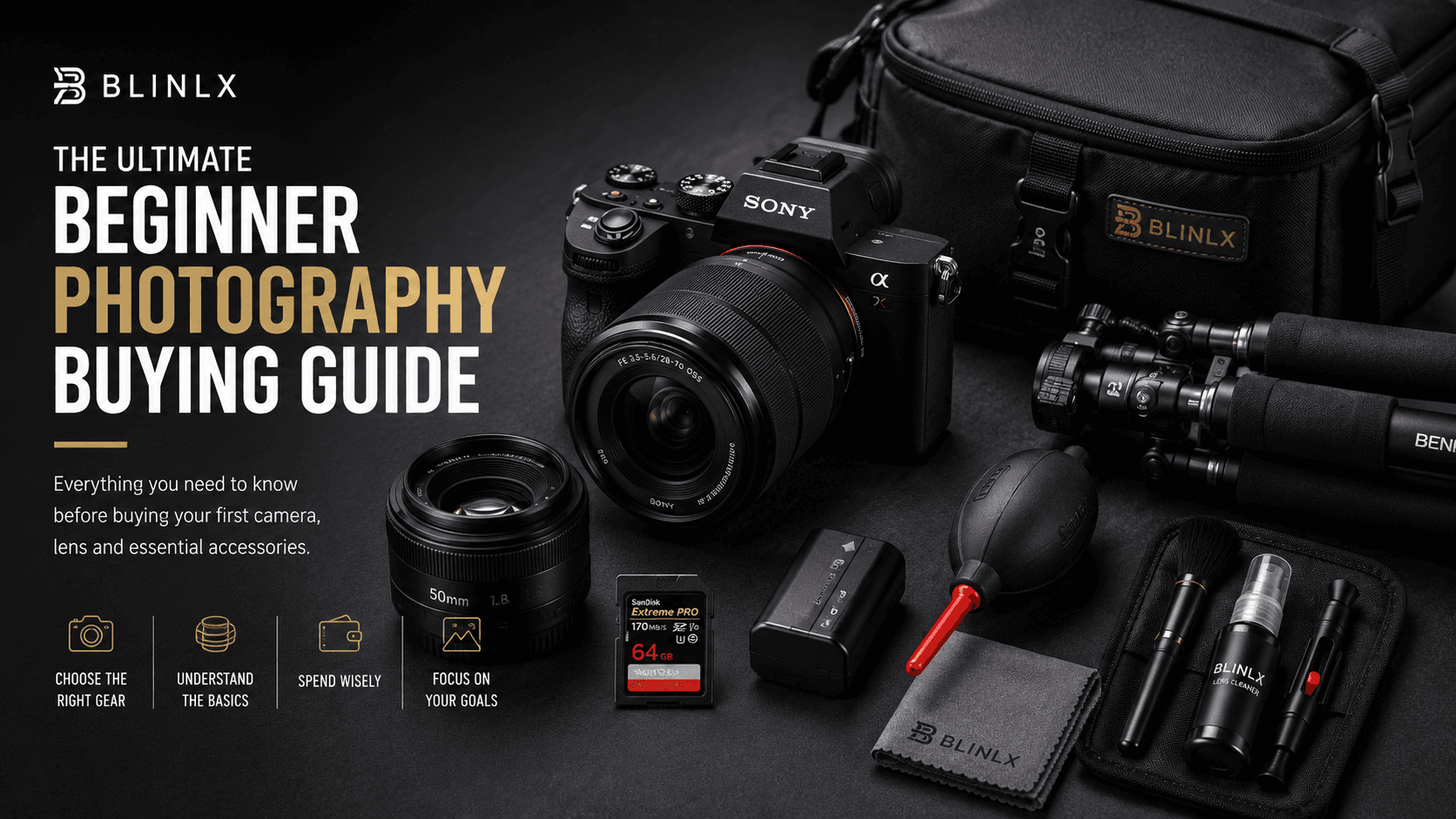
Read guideThe Ultimate Beginner Photography Buying Guide (2026)
Everything you need to know before buying your first camera, lens and essential accessories.
Read guideBefore you spend a penny
Still unsure what to buy?
Tell Blinlx what you need, what you want to use it for and how much you want to spend. We’ll help you make a smarter buying decision.
Try asking:
“Help me decide whether an APS-C or full-frame camera is right for my budget and photography goals.”