
Mirrorless vs DSLR: Which Camera Should You Buy in 2026?
A clear, practical comparison of mirrorless cameras and DSLRs, including autofocus, lenses, battery life, handling and long-term value.
Blinlx verdict
Most new buyers should choose mirrorless, but a used DSLR can still be exceptional value.
Mirrorless cameras are the safer long-term choice for most beginners because they offer stronger autofocus, better video features and growing lens systems. DSLRs remain attractive when buying used on a tight budget.
- Choose mirrorless when buying new.
- Consider a used DSLR when value matters most.
- Lens availability matters more than small body differences.
- Handling and comfort should influence the final decision.
Blinlx buying intelligence
🧠 What Blinlx Thinks
Mirrorless is the best default recommendation for most people starting photography today, but that does not make every DSLR a poor purchase.
If it was our money
We would buy a modern APS-C mirrorless camera if the budget allowed. On a tighter budget, we would seriously consider a well-kept used DSLR with a useful lens rather than stretching for a weak entry-level mirrorless body.
Why
- Mirrorless autofocus is usually easier for beginners to trust.
- Electronic viewfinders make exposure and colour easier to preview.
- Manufacturers are focusing most new development on mirrorless systems.
- Used DSLR bodies and lenses can offer excellent value.
Things to keep in mind
- Mirrorless batteries often do not last as long as DSLR batteries.
- Some mirrorless lens systems remain expensive.
- A comfortable DSLR may still suit some photographers better.
Quick summary
- Mirrorless is the strongest all-round choice for most beginners.
- A used DSLR can still be the best value option.
- Do not choose a system without checking the available lenses.
- Try both camera styles in your hands before buying.
Chapter One
The Blinlx Way
Every recommendation we make is guided by three principles designed to protect your money and help you buy with confidence.
Blinlx knowledge
Trust Before Profit
Blinlx should always prioritise the buyer’s best interests over affiliate commission, sponsorship value or short-term revenue.
Every Blinlx recommendation should begin with one question: if this were our money, what would we genuinely choose?
A product or retailer should never be recommended simply because it pays a higher commission.
When a cheaper product is the better choice, Blinlx should recommend the cheaper product.
When waiting is likely to produce better value, Blinlx should tell the buyer to wait.
When no available option is worth buying, Blinlx should be willing to recommend buying nothing.
Long-term user trust is more valuable than a short-term affiliate conversion.
Blinlx knowledge
Buy for Your Needs
The best product is the one that matches the buyer’s real needs, priorities and budget—not the product with the longest specification sheet.
Every buying decision should begin with the intended use rather than the available products.
A product with fewer premium features may still be the better choice when those features do not improve the buyer’s real experience.
Buyers should avoid paying for performance, capacity or capability they are unlikely to use.
Budget should be considered alongside the full setup cost, including accessories, subscriptions, maintenance and future upgrades.
A suitable product should solve the buyer’s actual problem without creating unnecessary expense or complexity.
Blinlx should recommend the simplest product that confidently meets the buyer’s current and reasonably expected future needs.
Blinlx knowledge
Buy for Longevity
A strong purchase should remain useful, supported and suitable for long enough to justify its total cost.
The cheapest product today is not always the least expensive product to own.
Buyers should consider expected lifespan, software support, repairability, durability and future performance before deciding.
A product that costs slightly more but remains useful for several additional years can provide significantly better long-term value.
Future needs should be considered realistically, without paying for extreme capability that is unlikely to be used.
Blinlx should favour products that balance current suitability with dependable long-term ownership.
Our recommendations
The Budget Beginner Setup
A reliable used DSLR or affordable entry-level mirrorless camera with its standard kit lens. This is the sensible starting point when learning photography without overspending.
- Keeps the initial cost under control.
- Provides everything needed to learn exposure, focus and composition.
- Leaves money available for a spare battery, memory card and camera bag.
- Can be upgraded gradually once you understand what you enjoy photographing.
The Balanced Mirrorless Setup
A modern APS-C mirrorless camera with dependable autofocus and a versatile everyday zoom lens. This is the strongest all-round choice for most beginners.
- Balances image quality, portability and price.
- Modern autofocus makes it easier to photograph people, pets and movement.
- A versatile zoom lens supports family, travel and everyday photography.
- Offers a clear upgrade path through additional lenses.
The Travel and Everyday Setup
A lightweight mirrorless camera paired with a compact zoom or small prime lens. This setup prioritises portability and makes it easier to carry the camera regularly.
- Small enough to carry on holidays and everyday outings.
- Produces excellent image quality without requiring a heavy bag.
- Suitable for family, travel, street and documentary photography.
- Encourages regular use because the complete setup remains manageable.
The Long-Term Enthusiast Setup
A higher-tier APS-C mirrorless camera with stronger controls, improved autofocus and room to grow. This suits beginners who expect photography to become a serious long-term hobby.
- Provides controls and performance that remain useful as skills develop.
- Reduces the need to replace the camera body quickly.
- Supports more demanding subjects such as wildlife, sport and action.
- Makes sense when the budget still allows for a useful lens and accessories.
What Is the Difference Between Mirrorless and DSLR?
A DSLR uses a mirror mechanism and optical viewfinder. Light enters through the lens, reflects from the mirror and reaches your eye through the viewfinder.
A mirrorless camera removes the mirror and displays a live digital image through the rear screen or electronic viewfinder.
Removing the mirror allows mirrorless cameras to be smaller, quieter and more flexible in the way they display exposure, colour and focus information.
Autofocus and Subject Tracking
Modern mirrorless cameras often provide face detection, eye detection and subject recognition across a large portion of the frame.
This makes them easier to use for children, pets, wildlife, sport and video.
Many DSLRs still focus extremely well through the optical viewfinder, but their live-view autofocus is often less capable than a comparable mirrorless camera.
Optical vs Electronic Viewfinders
An optical DSLR viewfinder shows the scene directly through the lens with no screen delay.
An electronic mirrorless viewfinder shows a digital preview that can display exposure, white balance, focus aids and image review.
Beginners often find electronic viewfinders easier because they can see how settings affect the final image before pressing the shutter.
Size, Weight and Handling
Small mirrorless bodies are useful for travel and everyday photography, but they can feel cramped with larger lenses.
DSLRs often have deeper grips, more physical controls and better balance with telephoto lenses.
The best choice is not the lightest camera. It is the camera you can comfortably hold and operate for long periods.
Battery Life
A DSLR optical viewfinder does not need to power a screen continuously, so many DSLR batteries can last through very long shooting days.
Mirrorless cameras power an electronic viewfinder or rear screen whenever you compose an image, which reduces battery life.
For most users this is manageable with a spare battery, but it is worth including that cost in the total budget.
Lens Choice and Long-Term System Value
DSLR systems have enormous used lens markets, which can make them excellent value.
Mirrorless systems receive most new lens development and offer newer designs, faster autofocus and smaller options in some categories.
Before choosing a camera, check whether the lenses you may need later are available and affordable.
Video Features
Mirrorless cameras usually offer better live-view autofocus, stronger face tracking and more modern video features.
Many DSLRs can still record excellent video, but they may be less convenient for continuous autofocus and handheld creator work.
For YouTube, family videos, social media and hybrid shooting, mirrorless is usually the safer choice.
Buying New vs Used
Which Route Makes More Sense?
| Situation | Best Route |
|---|---|
| Buying new | Choose mirrorless in most cases. |
| Very tight budget | Consider a used DSLR kit. |
| Video is important | Choose mirrorless. |
| Maximum battery life | A DSLR may suit you better. |
Which One Should You Buy?
Choose mirrorless if you are buying new, want strong autofocus, plan to shoot video or want access to the newest camera and lens technology.
Choose a used DSLR if your budget is limited, you value battery life or you can find an excellent body-and-lens package from a reputable seller.
Whichever system you choose, comfort, lens choice and total ownership cost matter more than the label on the camera.
Frequently asked questions
Is mirrorless better than DSLR for beginners?
Mirrorless is usually easier for beginners because it offers strong autofocus, live exposure previews and modern video features. A used DSLR can still be better value on a limited budget.
Are DSLRs obsolete?
No. DSLRs can still produce professional-quality photographs and remain excellent value on the used market, even though most manufacturers now focus development on mirrorless systems.
Do mirrorless cameras take better photographs?
Not automatically. Image quality depends on the sensor, lens, light, settings and photographer. Mirrorless cameras mainly offer operational and autofocus advantages.
Which has better battery life?
DSLRs usually provide longer battery life because their optical viewfinders do not require constant screen power.
Can DSLR lenses work on mirrorless cameras?
Many DSLR lenses can work on mirrorless bodies through compatible adapters, although autofocus performance and handling vary by system.
Should I sell my DSLR and move to mirrorless?
Only if mirrorless solves a real limitation for you. If your DSLR still meets your needs and you own useful lenses, upgrading may not improve your photographs enough to justify the cost.
Related guides
APS-C vs Full Frame: Which Camera Sensor Should You Buy in 2026?
A practical comparison of APS-C and full-frame cameras, including image quality, low-light performance, lenses, portability and total system cost.
Read guideBest Mirrorless Cameras Under £500
Independent Blinlx buying advice for mirrorless cameras under £500, including the features, trade-offs and mistakes that matter.
Read guideThe Ultimate Beginner Photography Buying Guide (2026)
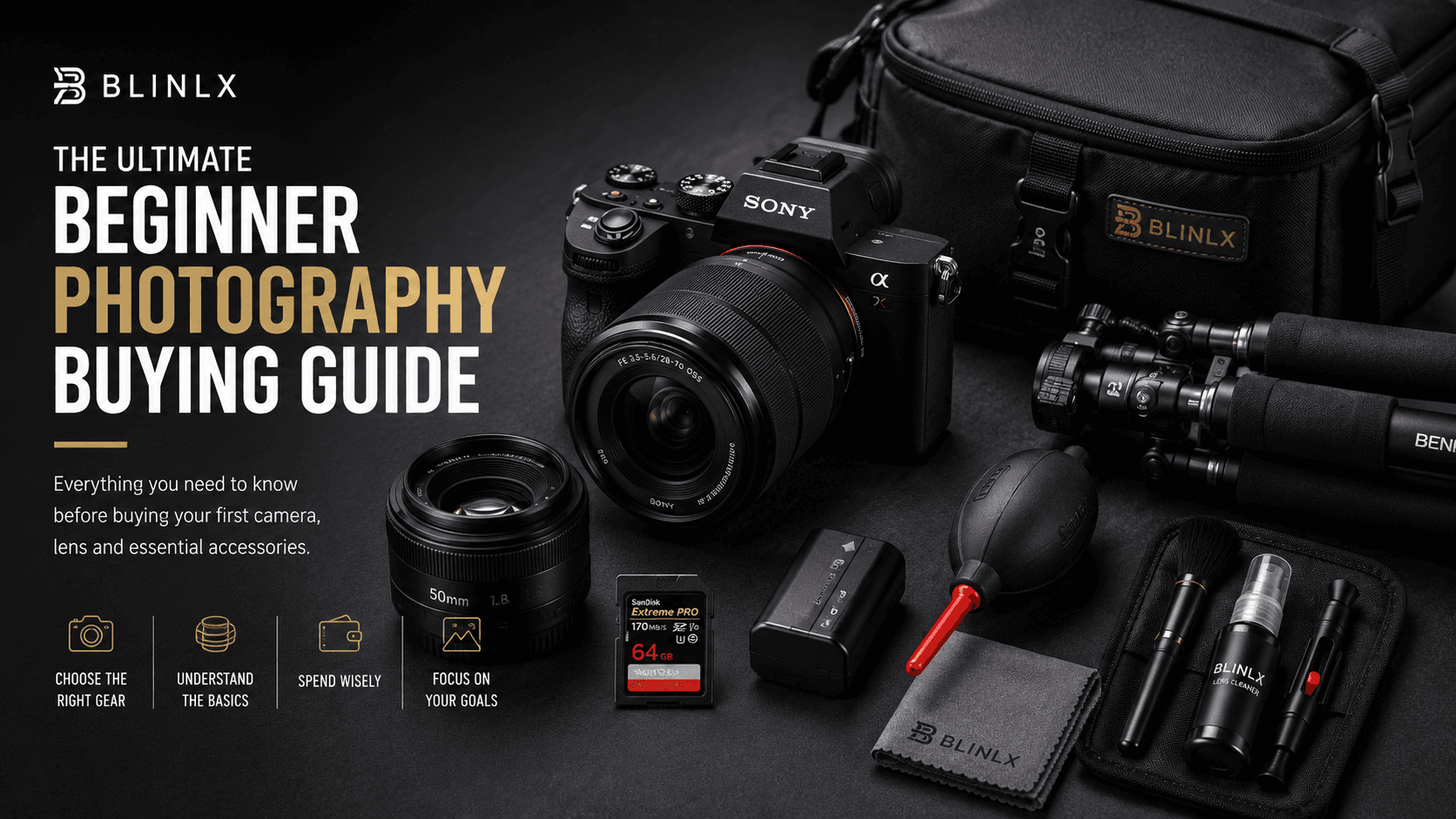
Everything you need to know before buying your first camera, lens and essential accessories.
Read guideBefore you spend a penny
Still unsure what to buy?
Tell Blinlx what you need, what you want to use it for and how much you want to spend. We’ll help you make a smarter buying decision.
Try asking:
“Help me decide whether a mirrorless camera or DSLR is better for my budget and the type of photography I want to shoot.”